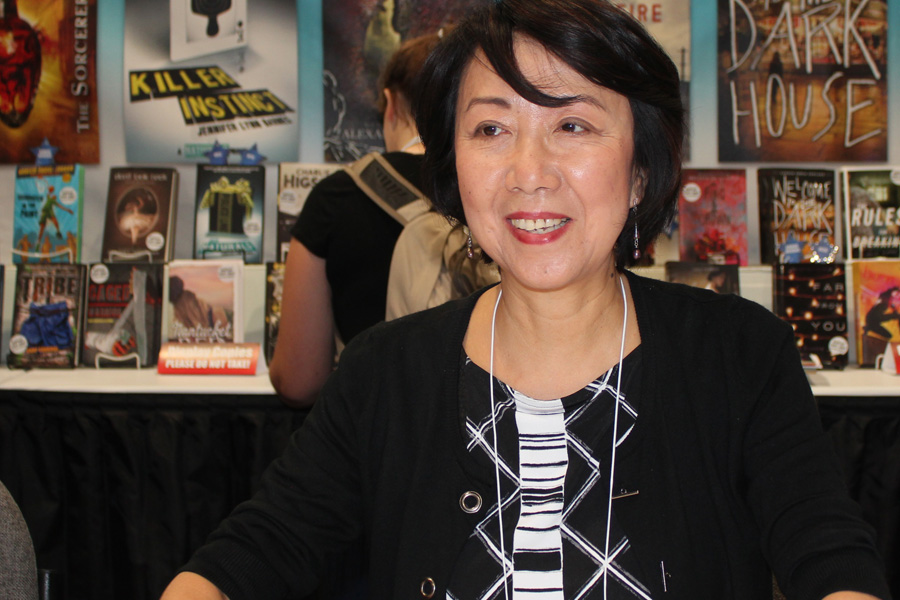
Ji Li Jiang and the World That Shaped Her
A writer whose life reads like a lantern amid a storm is Ji Li Jiang. Red Scarf Girl, her memoir on the Cultural Revolution in China, is her best-known work. Her narrative transcends a book. It follows a family through politics, separation, terror, perseverance, and reinvention.
Ji-li Jiang was born in Shanghai on February 2, 1954. She grew up in a fast-changing, terrible China for many families. Before political unrest, she was a promising student and child. The Cultural Revolution in 1966 cast doubt on that claim. Her familial past made her susceptible, and her once-stable home became a place of pressure and instability.
What makes Ji Li Jiang so compelling to me is that she did not simply survive a major historical crisis. She later transformed memory into literature. She took what could have remained silent pain and shaped it into a voice that students, teachers, and general readers could hear clearly.
Early Life in Shanghai
China’s major city Shanghai was Ji Li Jiang’s childhood home. In the 1950s and 1960s, her family was well-educated and culturally rich. That position counted. Family identification was like a child’s clothing label in Communist China. Doors might open or close.
Ji-li excelled academically as a girl. She aspired to succeed because she liked state values. This is one of her most notable life events. She was not a visitor. Young and optimistic, she wanted to succeed in the system. It hurt harder to rupture in 1966.
During the Cultural Revolution, children were seen as extensions of their families. Political movements penetrated schools, friendships, and families. Ji Li Jiang felt the change immediately and harshly. The family suffered years of public and private agony due to her father’s history.
Education and the Long Path Forward
One reason I find Ji Li Jiang’s life so remarkable is that it did not freeze in the trauma of her youth. She kept moving. After years of upheaval, she pursued higher education and built a future across continents.
Her educational path included Shanghai Teachers’ College, then Shanghai University. Later, after emigrating in 1984, she continued her studies in the United States. In 1987, she earned a bachelor’s degree from the University of Hawaiʻi at Mānoa.
That timeline matters because it shows rebuilding in concrete terms:
| Year | Milestone |
|---|---|
| 1954 | Born in Shanghai |
| 1966 | Cultural Revolution begins |
| 1978 to 1980 | Studies at Shanghai Teachers’ College |
| 1980 to 1984 | Attends Shanghai University |
| 1984 | Emigrates to Hawaii |
| 1987 | Graduates from the University of Hawaiʻi at Mānoa |
| 1992 | Co-founds East-West Exchange |
| 1997 to 1998 | Publishes Red Scarf Girl |
| 2003 | Launches Cultural Exchange International |
I see in this timeline a pattern of persistence. Education became more than academic progress. It became a bridge from one life into another.
A Career Beyond the Page
Before becoming an author, Ji Li Jiang worked in business and administration. Hawaii-based Aston Hotels and Resorts employed her as a corporate operations analyst. Her hospital system budget director position was in Chicago. These roles may appear unrelated to memoir and children’s books, but they show her discipline, adaptability, and practicality.
She also co-founded East-West Exchange in 1992 and later expanded her cultural work through Cultural Exchange International in 2003. That part of her career tells me she was not content only to remember the past. She wanted to create connections between people and cultures in the present.
Her path into writing was not the usual literary apprenticeship. She did not begin as a novelist in a quiet study. She came to literature after professional work, migration, and reflection. That gives her writing a certain gravity. It feels earned.
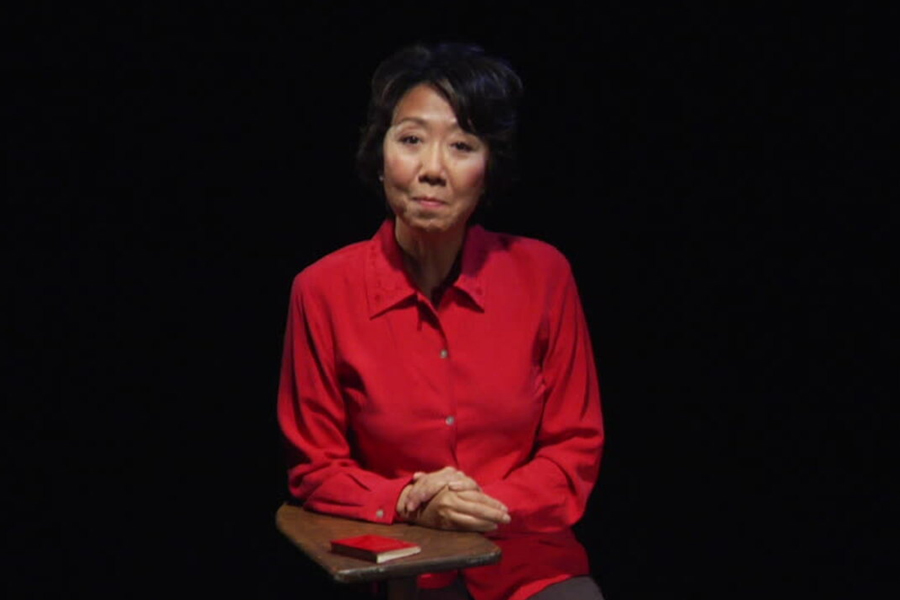
Red Scarf Girl and the Power of Witness
Ji Li Jiang’s most influential book is Red Scarf Girl, published in 1997 and 1998. The memoir tells the story of her youth during the Cultural Revolution, especially the way politics invaded identity, family loyalty, and moral choice.
I understand why this work has endured after reading about its influence. Not only a historical narrative. A child’s perspective refined by adult memories. Result: intimate and approachable. China between 1966 and 1976 is not the only topic. Within one household, they sense it.
The title itself is powerful. A red scarf is usually associated with youthful belonging and political idealism. In Ji Li Jiang’s life, that symbol becomes complicated, almost double-edged. It represents both aspiration and exclusion, pride and pain.
The book received major recognition and became widely used in schools, high schools, and university courses. In many classrooms, it serves as one of the first personal narratives students encounter about the Cultural Revolution. That educational role is central to her legacy.
Other Books and Literary Range
Although Red Scarf Girl remains her signature work, Ji Li Jiang wrote beyond memoir. Her books include The Magical Monkey King, Red Kite Blue Kite, and Lotus and Feather. These works show range in audience and subject while keeping a connection to Chinese culture and history.
I see this broader body of work as an extension of her mission. She does not write only to recount suffering. She also writes to interpret heritage, folklore, migration, and identity for younger readers. In that sense, her books function like windows and bridges at once.
Her Father Henry O and His Defining Influence
Her father, Henry O. Jiang Xireng, is essential to Ji Li Jiang’s life and public interest in her family. He became a well-known Chinese-American actor in the US after appearing in The Last Emperor, Shanghai Noon, Romeo Must Die, Rush Hour 3, 2012, The Sopranos, and The West Wing.
Before his acting career, he was persecuted during the Cultural Revolution. Detained for counter-revolutionary actions, he was compelled to work. The encounter wasn’t abstract politics for his daughter. Family reality. His anguish was a Red Scarf Girl emotional pillar.
I think Henry O’s later acting career adds a striking dimension to the family story. It is as if a man once pushed into silence eventually stepped back onto a stage and into the frame. The arc from persecution to performance gives the family’s history an almost cinematic quality.
Her Mother Ying Chen and the Quiet Strength of Survival
Ji Li Jiang’s mother, Ying Chen, receives less public attention, yet her importance is unmistakable. In family accounts, she appears as a stabilizing presence during a period when stability itself was fragile.
Every stressed family has someone who keeps the roof up. Here, Ying Chen appears to have played that function. Despite little professional specifics, her emotional and practical influence in the home matters. A stable parent can make the difference between despair and endurance during years of accusation, dread, and uncertainty.
To me, her place in the family story reflects a truth often missed in public history. Not every crucial figure stands at a podium or publishes a book. Some hold the family together one day at a time.
Siblings and the Wider Family Circle
Ji Li Jiang had a sister, Jiang Ji-yun, and an elder brother, Jiang Ji-yong. Their personal and professional lives are private, yet they are members of her world-changing family. In memoir-based family histories, siblings reflect, witness, and support each other during turmoil.
Her sister Ji-yun is also linked to a later chapter in the family’s migration story. Henry O and his wife eventually emigrated to the United States partly to help care for Ji-yun’s children. That detail hints at the continuing interdependence of the family across generations and borders.
Part of Ji Li Jiang’s childhood was spent with her grandmother. The grandmother adds another generation to family life, although her separate biography is unknown. In stressful households, grandparents frequently carry memory like a hidden yet crucial root system.
Public Life, Privacy, and Lasting Influence
Despite her literary success, Ji Li Jiang has kept much of her private life out of the public spotlight. There is no reliable public documentation identifying a spouse or children. What stands out instead is her continuing role as an educator, speaker, and cultural bridge-builder.
She has participated in school visits, literary discussions, library activities, and cultural exchanges. Her influence persists without a prominent media profile or social media presence. Public figures shine like fireworks. Li Jiang has been steady like a lamp.
A girl born in 1954 Shanghai, influenced by the 1966 crisis, educated by determination, emigrating in 1984, graduating in 1987, developing a career, and releasing a famous book by 1997 is a late 20th-century narrative. That sequence goes beyond biography. One person speaks history.
FAQ
Who is Ji Li Jiang?
Ji Li Jiang, usually written as Ji-li Jiang, is a Chinese-American author best known for the memoir Red Scarf Girl. She was born in Shanghai on February 2, 1954, and later emigrated to the United States, where she built careers in business, cultural exchange, and writing.
Why is Ji Li Jiang important?
She is important because her memoir gives readers a clear, personal account of the Cultural Revolution through the eyes of a child. Her work has been widely taught in schools and universities and has helped many readers understand a major historical event through lived experience.
What happened to her family during the Cultural Revolution?
Beginning in 1966, Ji Li Jiang’s family was politically targeted because of her father’s background. Her father was accused of counter-revolutionary activity, detained, and forced into labor. The family experienced years of pressure, fear, and hardship.
Who was Ji Li Jiang’s father?
Her father was Henry O, whose birth name was Jiang Xireng. He later became a Chinese-American actor known for film and television roles, but he was also a major figure in Ji Li Jiang’s personal story because of his persecution during the Cultural Revolution.
Who was her mother?
Her mother was Ying Chen. Although less is publicly documented about her career, she is remembered as a steady and important presence in the family during extremely difficult years.
Did Ji Li Jiang have siblings?
Yes. She had an older brother, Jiang Ji-yong, and a sister, Jiang Ji-yun. Public details about their later lives are limited, but they are part of the family story surrounding her childhood and memoir.
What schools did Ji Li Jiang attend?
She studied at Shanghai Teachers’ College, Shanghai University, and later the University of Hawaiʻi at Mānoa, where she received a bachelor’s degree in 1987.
What did she do before becoming a writer?
Before becoming known as an author, she worked in business and administration. Her roles included corporate operations analyst in Hawaii and budget director for a healthcare system in Chicago. She also founded and led cultural exchange organizations.
What books did Ji Li Jiang write?
Her best-known book is Red Scarf Girl. She also wrote The Magical Monkey King, Red Kite Blue Kite, and Lotus and Feather.
Is Ji Li Jiang active in public life today?
She has maintained a relatively low public profile, but she has continued to participate in educational speaking engagements, literary events, and cultural exchange activities. Her influence remains strong through her books and their use in classrooms.