Jill Wine Banks and Why Her Story Still Matters
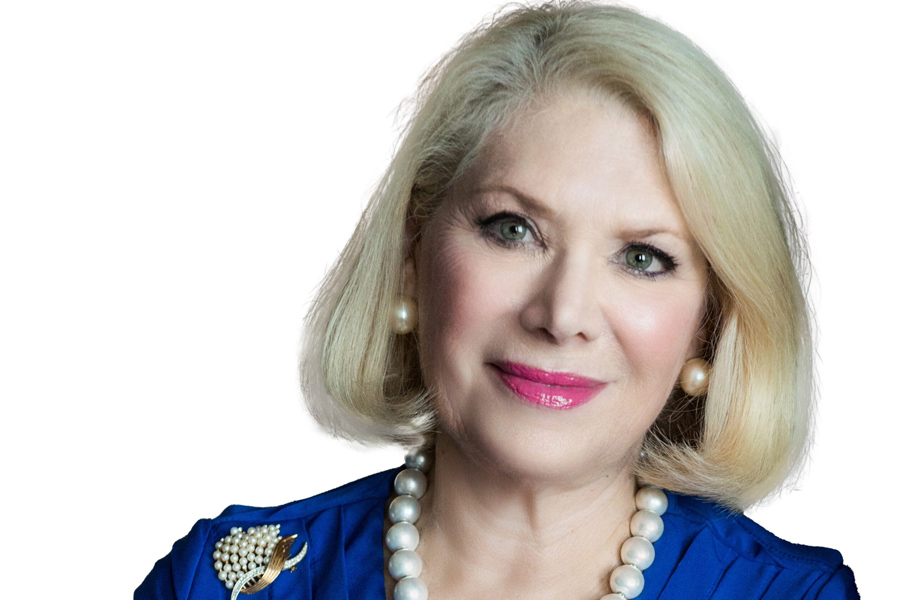
I see more in Jill Wine Banks than a famous lawyer and TV pundit. I see a lady who entered unsuitable spaces, stood her ground, and altered the rooms for future women. Her journey takes her from midcentury Chicago to Watergate, the Pentagon to corporate boardrooms, and modern media.
She was born Jill Susan Wine in Chicago, Illinois, on May 5, 1943, in a city recognized for its toughness, ambition, and practicality. Setting feels appropriate. Her career feels like pressure-forged steel. She always approached powerful institutions: the Department of Justice, the U.S. American Bar Association, Army, major corporations, public education, and national television.
Yet her public story is not only about titles. It is also about persistence, preparation, and family roots. To understand Jill Wine Banks fully, I think it helps to see both the headlines and the household behind them.
Early Life and Family Background
Parents who were disciplined and determined reared Jill Wine Banks in Chicago. Her father, Bert S. Wine, was a CPA. Jill was raised in a Jewish immigrant home characterized by labor, identity, and tenacity by her mother, Sylvia Dawn Wine, née Simon.
Important family scenario. Children frequently silently absorb ambition before they can identify it. Jill Wine Banks’s environment was serious and upward-looking. Chicago was a key feature. Not only where she was born in 1943. This city shaped her instincts and welcomed her back at several life turning moments.
Public records and biographical accounts mention no siblings, which has led many to assume she may have been an only child. Whether or not that shaped her independence, her life suggests someone who learned early how to rely on her own judgment.
Education and the Foundation of a Legal Mind
Jill Wine Banks’ career was built on two solid academic tracks. University of Illinois awarded her a Bachelor of Science in journalism in 1964. I notice that detail because journalism teaches people to ask incisive questions, listen closely, and see what others hide. Those are important abilities for a prosecutor.
She graduated from Columbia Law School in 1968 with a JD. The US was in social and political turmoil by then. Law was more than a career then. It was frontline. In 1968, entering the legal sector meant entering a time of turmoil, reform, and constitutional strain.
Soon after law school, she joined the U.S. Dept. of Justice. She was one of the first female Organized Crime attorneys. That was an impressive position for a lady. In the late 1960s and early 1970s, many legal institutions considered women as outliers. Not waiting for permission, Jill Wine Banks joined.
Watergate and the Moment That Defined a Generation
Many people associate Jill Wine Banks with Watergate, and rightly so. She was one of Leon Jaworski’s three Assistant Watergate Special Prosecutors from 1972 to 1973. This put her in the heart of one of America’s most significant constitutional problems.
When I think of that period, I think of a nation watching power unravel in real time. Watergate was not simply a scandal. It was a stress test for the rule of law. In that charged atmosphere, Jill Wine Banks emerged as one of the memorable legal figures in the case.
She was famous for cross-examining Rose Mary Woods, President Richard Nixon’s secretary, over the missing 18 1/2 minutes from a vital tape. Her questions revealed the official explanation’s flaws. Lightning struck the courtroom. She meticulously disproved a narrative many Americans distrusted.
Watergate also highlighted her for gendered reasons. Along with her legal competence, reporters praised her attractiveness and miniskirts. That difference reflects the time. She was seen differently than many male colleagues despite her history-making work. She handled the weight and elegance of that moment.
Historic Roles After Watergate
Some public figures spend the rest of their careers living off a single famous chapter. Jill Wine Banks did not. After Watergate, she kept building.
She was U.S. General Counsel under Jimmy Carter from 1977 to 1980. Army. First female to occupy that office. That was no symbolic feat. One of the country’s most traditional institutions has a high-stakes legal position. She worked with Congress to integrate women into the Army and West Point.
Her return to Chicago led to a Jenner & Block partnership in 1980. First Solicitor General and first female Deputy Attorney General of Illinois, she established new ground. They weren’t ceremonial firsts. They showed she could perform at the highest level of public law in varied situations.
In 1987, she broke another barrier when she became the first female Executive Vice President and Chief Operating Officer of the American Bar Association. By this point, her resume looked like a corridor of firsts, each door opened with force and precision.
Corporate Leadership, Nonprofit Work, and Public Service
Jill Wine Banks changed lanes. She rose in business leadership in the 1990s. From 1992 until 2000, she was a Motorola VP for worldwide cellular business development. She focused on worldwide collaborations as Maytag’s Vice President from 1997 to 2000.
This stage of her career displays her range, which I find fascinating. She was more than a government lawyer who remarked on politics. She adopted business, tech, and strategy. From courts and agencies to markets and executive offices, she took her legal profession to a new battleground.
She developed and ran Winning Workplaces, a charity that helped small businesses improve, from 2001 to 2003. She was Chicago Public Schools’ career and technical education chief officer from 2003 to 2008. She developed initiatives that connect students to practical prospects, including early college models like DeVry Advantage Academy.
Her path here feels less like a straight line and more like a river that keeps finding new channels. Law, business, nonprofit work, public education: she kept applying the same core strengths to different needs.
Media Career, Writing, and Public Voice
A new generation knows Jill Wine Banks as an MSNBC contributor and legal analyst since 2017. Her television work has made her a prominent interpreter of US legal and political events. She addresses complicated constitutional questions as a historian who made history.
She also co-hosts two podcasts, #SistersInLaw and iGenPolitics. Through those platforms, she extends her public voice beyond television, speaking to audiences who want legal analysis with context and clarity.
Her memoir, The Watergate Girl: My Fight for Truth and Justice Against a Criminal President, was released in 2020. The title is clear. The memoir revisits her most famous chapter and discusses gender, professional identity, and the cost of speaking truth in powerful environments.
Her work in documentaries and international media appearances has further widened her reach. She has remained active not as a relic from the 1970s, but as a living witness with something urgent to say about the present.
The Family Members in Jill Wine Banks’s Life
Family details about Jill Wine Banks are relatively private, but several key people are publicly known.
Bert S. Wine
Bert S. Wine fathered Jill Wine Banks. Certified public accountant in Chicago. His vocation implies precision, order, and responsibility, which are common in high-achieving children’s families. His wife and he raised Jill in a Jewish immigrant family tradition of hard work and discipline.
Sylvia Dawn Wine
Mother of Jill Wine Banks was Sylvia Dawn Wine (born Simon). Despite minimal professional knowledge, her role in Jill’s early childhood is evident. She influenced Jill’s Chicago family upbringing. Mothers can boost daughters’ confidence even when historical records are silent.
Ian David Volner
Jill married fellow lawyer Ian David Volner in 1965. She was Jill Wine-Volner early in her career. The marriage ended in divorce. The years between law school, the Justice Department, and her national notoriety are key to her climb.
Michael A. Banks
Jill married Winnetka, Illinois antiques merchant Michael A. Banks in 1980. She created her long-term private life with her second husband. In an age that encourages disclosure, the pair has kept personal issues private. Their antiques passion provides a little but distinct human touch. It implies a life that values history in politics, law, things, workmanship, and memory.
Children and Siblings
There is no widely confirmed public information indicating that Jill Wine Banks has children. Likewise, no siblings are commonly identified in public biographical records. Her private life has remained carefully guarded, and that boundary appears intentional.
Career Milestones at a Glance
| Year | Milestone |
|---|---|
| 1943 | Born in Chicago on May 5 |
| 1964 | Earned B.S. in journalism from the University of Illinois |
| 1965 | Married Ian David Volner |
| 1968 | Earned J.D. from Columbia Law School |
| 1968 to 1972 | Served in the DOJ Organized Crime section |
| 1972 to 1973 | Assistant Watergate Special Prosecutor |
| 1977 to 1980 | General Counsel of the U.S. Army |
| 1980 | Married Michael A. Banks |
| Early 1980s | Served as Illinois Solicitor General and Deputy Attorney General |
| 1987 | Became ABA Executive Vice President and COO |
| 1992 to 2000 | Vice President at Motorola |
| 1997 to 2000 | Vice President at Maytag |
| 2001 to 2003 | Led Winning Workplaces |
| 2003 to 2008 | Served in Chicago Public Schools leadership |
| 2017 | Joined MSNBC as legal analyst |
| 2020 | Published The Watergate Girl |
| 2023 | Received ABA Margaret Brent Women Lawyers of Achievement Award |
| 2024 | Honored with the Making Democracy Work Award |
Honors, Recognition, and Public Reputation
In her decades of labor, Jill Wine Banks has won many awards. Her law, governance, and public leadership achievements are notable. Legal, civic, and women’s rights groups have honored her. She received the Margaret Brent Women Lawyers of Achievement Award from the American Bar Association’s Commission on Women in the Profession in 2023. The League of Women Voters of Chicago gave her the Making Democracy Work Award in 2024.
Those honors reflect more than longevity. They reflect relevance. Some careers burn brightly and fade. Hers has kept producing light across changing eras.
FAQ
Who is Jill Wine Banks?
Jill Wine Banks is an American attorney, former Watergate special prosecutor, public official, corporate executive, author, podcast host, and MSNBC legal analyst. She was born in Chicago on May 5, 1943.
Why is Jill Wine Banks famous?
She is best known for her role in the Watergate investigation, especially her cross examination of Rose Mary Woods about the missing 18 1/2 minutes on a Nixon tape. She later became known for several barrier breaking leadership roles and for her work as a legal commentator.
Who were Jill Wine Banks’s parents?
Her parents were Bert S. Wine and Sylvia Dawn Wine, whose maiden name was Simon. They raised her in Chicago in a Jewish immigrant family.
Was Jill Wine Banks married?
Yes. She married Ian David Volner in 1965, and that marriage later ended in divorce. In 1980, she married Michael A. Banks.
Does Jill Wine Banks have children?
There is no widely confirmed public information showing that she has children. She has kept much of her private life out of public view.
What did Jill Wine Banks do after Watergate?
She became U.S. General Counsel after Watergate. Army from 1977 to 1980, became a partner at Jenner & Block, was Illinois Solicitor General and Deputy Attorney General, led the American Bar Association as Executive Vice President and COO, had VP positions at Motorola and Maytag, founded a nonprofit, and led Chicago Public Schools.
What is Jill Wine Banks doing now?
She is active as an MSNBC legal analyst, podcast host, author, and public commentator. Since 2017, she has remained a prominent media voice on legal and constitutional issues.
What is Jill Wine Banks’s memoir?
Her memoir is The Watergate Girl: My Fight for Truth and Justice Against a Criminal President, published in 2020. It revisits her Watergate experience and explores her life and career in greater depth.